


Barriers to Good Relationships
What gets in the way of all of the things that make a relationship work?
We assume that these are components that we all want in our relationships.
When we think about what makes this difficult, several kinds of hurts or oppression, imposed on us at various points in our lives by our environment, can be identified as causes such as:
Sexism: This is a primary one. Women in our society have been defined primarily as servants, supporters, and nurturers of men. This denies them the chance to discover who they are and what their lives might be like, and to pursue their own interests independently of the interests of men.
Men are taught to be aggressive, competitive, "self-reliant," and in control. The result is that they alienate themselves from everyone else in society, including other men, by playing a dominant and oppressing role. They rely blindly on women to meet their emotional needs, since they have not learned to do that for themselves, or for each other.

Unless a community focuses attention on sexism consciously and makes a common decision to work hard against it, most men will automatically gravitate to women for attention, listening, and support. A woman may look for a relationship with a man in order to feel secure, cared about, and protected. It makes sense for people in the community or household to question people in this kind of a relationship.
Dynamics operating that are clearly sexist should be interrupted.
BUDs can be created for the purpose of being a support group, whether they are a feminist collective or a gay caucus of sorts they can be created to provide a safe environment in which members within them can share thinking and strategy in combating sexism and building closer relationships with each other. Men in The Transition Inter-Community Network are assuming more responsibility for interrupting sexism operating in their brothers and for helping other men deal with and process their feelings. This is important as women they relate to begin to withdraw traditional feminine types of support and get closer to other women.
Ageism: Discriminating or putting people in rigid roles or categories on the basis of their age is another barrier to healthy relationships. Most adults have difficulty relating to children as full, equal human beings. The reason for that is that none of us were treated as responsible people when we were children. So we repeat toward children the same hurtful behavior that was directed at us when we were young.
Ageism directed towards older people tends to stereotype them as "retired," as having outlived their usefulness and productivity. This society places a high premium on being young. Things are changing fast, so the information and experience that older people have does not always seem particularly relevant. Often this is a false assumption.
There is a danger of slipping into parent-child or even grandparent-grandchild roles, but we are learning that people of very different ages and experience can perceive and relate to each other as equal human beings. It is also helpful for older people to find support among themselves.
"Old Needs and Hurts": There are many kinds of "old hurts" that we have experienced that rear their ugly heads in various unpleasant ways when we try to relate to people in the present. All of us had needs at various times growing up that did not get met. These tend to attach themselves to our personalities and become fixtures. If we're not aware of them and how they operate they can create difficulties.
One way this happens is in trying to find one person who will meet all of these needs, who will finally love us just exactly the way we really want to be loved. This syndrome can cause a person to move from one relationship to the next, continually frustrated because no one seems to do it quite right. No one loves us the way we wanted our father or mother or older brother to.
Another way old needs can crop up is in feelings of jealousy and competition. These feelings come out of a fear that love is a scarcity- "there just isn't enough of it to go around and if I don't grab a hold of someone really tight and hold on, there isn't going to be enough for me." Operating under this set of assumptions, a person feels threatened when a loved one loves and is loved by another person. It is difficult not to fear being left or abandoned, that secretly "she loves him more than she does me." If the feelings are strong enough and have no outlet they can cause torment for the person and drive friends to exasperation. Nearly everyone is susceptible to feelings of jealousy or competition, especially when someone they love is in a relationship with someone else.
Another way that old hurts can appear in present relationships is in the continual demand to "prove that you love me." Someone may ask for reassurance in many different ways, but none is ever quite convincing enough. The person may conclude that they really are not loved after all if certain things are not done-if a certain ritual is not performed, if they are challenged on something, or told "no, I don't want to spend time with you now."
So, what is to be done about people and their feelings? We assume that people act in ways that are sexist or ageist, who dominate or allow themselves to be dominated, who feel competitive or consistently unloved, do so because they are trapped by their feelings. They have been hurt repeatedly in the past in ways that restrict their ability to love and be loved. This becomes especially obvious in a community.
People are not expected to love just one person in one particular kind of way. Our loving works through lots of different kinds of relationships with different people. People are stretched by that experience, and expected to work on the things that restrict them.
There s a dangerous tendency in relationships to act on feelings without being aware that they are there. Some people may structure their whole lives around doing things that will make other people love them, without fully realizing that they're trapped by the feeling that people don't love them. People in The Transition Inter-Community Network try to be aware of what their feelings are, and how those feelings act as a force in their relationships. It is helpful to share that information with the other person(s)in a relationship, so that they can understand when a friend acts or feels in a way that seems inappropriate. Recognizing feelings and acknowledging them is an important first step.
Here at The Transition we feel that feelings should be examined carefully before they are acted upon. Where is my anger coming from in this discussion? Is it really directed at this person or is it coming up from previous talks that this reminds me of, that were frustrating or difficult for me? People try to avoid "dumping," or unloading all of their feelings at a particular moment on another person. It is often difficult to separate our thinking and our true perceptions of the present situation from old hurtful feelings that pull us and demand that we act in certain ways.
Re-evaluation Counseling is a way many people can deal with their feelings. In counseling sessions people are encouraged to go back to old memories that still carry pain with them, and they cry, rage, tremble, and laugh until the pain relaxes and they are freed from the grip of old memories. This is often a very long process. Fortunately, people don't have to be completely free from old hurts to have good relationships in the present. Once people have identified where their feelings come from and are working on them in counseling sessions, they can feel themselves "winning" and assume that they won't be trapped by them forever. This frees them to act in ways that are flexible and appropriate to the present.
It is n large part this kind of clarity about feelings and what to do with them that allows relationships in The Transition Inter-Community Network to flourish. If feelings are not dealt with well, communities can dissolve or simply flounder and come to a stop, as immense amounts of energy are consumed dealing with the challenging new relationships people form.
People forming new communities must realize that they will not be able to satisfy everyone's apparent emotional "needs," stated or unstated. All it takes is one person who demands that every feeling they have be assuaged or responded to by community members to send everyone flying in different directions. It is important for people to be clear when they are living in community about what their limits are in dealing with the relationships they have with people in it
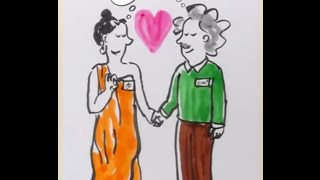
Some people on this life path moving into the direction of a Global Egalitarian System tend to be critical of marriage and the tradition of male domination that has accompanied it. Needs for love and compassion in general do not all get placed on one other person. Most people have a valuable network of friendships and associations. Some of these may be more important or have a greater sense of permanence than others, but they are rarely approximate the model of traditional marriage.
Married couples who are now part of The Transition usually find themselves living in situations where they depend almost exclusively on each other for meeting personal needs. In community that is no longer necessary. They are surrounded by people ready to be their friends, to nurture them and their interests and offer friendly challenges. Each person in a couple may discover needs and interests that can be pursued independently of the other. Each person may develop a slightly different circle of friends and begin spending increasing amounts of social and work time with them.
This tendency can have positive effects on the people in a couple relationship. They usually begin to realize that, while they love each other, much of the time they have spent with each other has been at the expense of pursuing personal strength and independence from each other. Their demands for time and attention from each other become fewer and less stringent.
Quite likely each will begin to seek questioning and feedback about the relationship, leading to serious reflecting and evaluating. This evaluating will gradually begin to work changes.
In a male/female relationship the woman may begin to develop friendships with other women and become involved in feminist activities. The man may join a men's group. Sexist dynamics in the relationship will certainly be pointed out.
This is a creative process! Understandably, however, it can be upsetting and even threatening. One or both may begin to wonder what has happened to the relationship and why they don't spend as much time together as they used to.
What is happening? Usually two things.
First, changes are happening in each person that have implications for their relationship.
Secondly, there is less time spent and less attention given to each other than previously.
As a result, they can get badly out of touch. Furthermore, both are probably discovering that, while there is respect in the community for their relationship, they are regarded and affirmed primarily as individuals, not as members of a couple.
Being part of a larger collective group like a communal household or an intentional community requires a strong individual identity in relation to that group. People in that group want to hear their individual thoughts in decision-making, and to agree or disagree with them individually. Couples acting as a "bloc" within the group can create an unhealthy power dynamic that will stir resentment among other housing or community members.
It is healthy that couples who enter community pursue their individuality.
One danger is that they may begin avoiding each other. The new friendships they both form may seem fresher, less restrictive,, more rewarding, and more reflective of the changes that are happening to them.
The old relationship may seem deadening and unresponsive by comparison. Both may be very conscious of the problems and old patterns of behavior, the heavy expectations that accompany the relationship. It's much easier to opt for the new friendship.
No doubt it's true that changes should be made in the old relationship. At some point the relationship may even need to end, or at least take new form. On the other hand there can be strong reasons for maintaining it and working it out. Chances are that both people know each other very well. Once they free themselves of old resentments or unreasonable expectations of each other, they can be enormously helpful in pushing each other to grow in areas that have been difficult in the past. They may understand things about each other that are perplexing and take a long time for other people to grasp. Undoubtedly they both love each other a lot, and underneath old feelings of hurt is a willingness to nurture and support each other.
For couples to be helpful to each other in these ways, encouragement from others is needed.
Each person in the couple needs to know that they will not have the same crushing burden to meet their significant other's emotional needs that they had before moving into community.
They both need to know they will not be expected to play the role of provider and protector. The relationship may continue with the clear understanding that they are separate individuals with individual lives, and that their priorities are their own personal growth and fulfillment.




Comments